Mito2 Wellness Technology

Simulated Altitude Therapy Equipment for Wellness Facilities

Mito2 is a professional Simulated Altitude Therapy system, clinically known as Intermittent Hypoxic-Hyperoxic Training (IHHT). It delivers Active Cellular Training through programmed hypoxic and hyperoxic oxygen intervals, with real-time SpO2 safety monitoring on every client.

Start with the goals your clients care about.

Everyday energy, metabolic health, and exercise recovery are conversation starters, not established Mito2 outcomes. These studies examined specific protocols and populations, not the Mito2 device. Results cannot be assumed to apply to every client. Suitability requires individual screening.

Adults interested in everyday wellness, metabolic wellbeing discussions with a qualified clinician, staying active as they age, or training options may explore Mito2 with a provider. Interest alone does not establish suitability. Trained staff should screen clients and seek appropriate clinical guidance before sessions.

Track session readings over time. Review recorded oxygen saturation, heart rate, and cycle timing with your provider. Session readings do not measure oxygen efficiency, mitochondrial function, biological age, or clinical improvement.

What Mito2 is

Mito2 is a turnkey IHHT platform built for wellness facilities including medical spas, chiropractic facilities, integrative medical practices, performance gyms, trainers, and wellness centers. Trained staff supervise programmed 40 to 50 minute sessions on standard 110V power.

Guided sessions alternate lower- and higher-oxygen air while clients rest. The 2019 Nobel Prize recognized discoveries about how cells sense and adapt to oxygen availability. It was not awarded to Mito2 or IHHT and does not validate product outcomes.

Why facilities add Mito2

How it differs from hyperbaric oxygen

HBOT delivers oxygen in a pressurized chamber. IHHT alternates lower- and higher-oxygen air at ambient pressure. Their protocols, uses, and evidence differ.

Pricing and demos

Pricing is shared after a short qualification conversation to confirm fit. Request pricing or a demo at https://mito2.com or call +1 (936) 280-5333.
Key pages

    Skip to main content
    What Does Oxygen Do in the Body? (And Where IHHT Fits)
    IHHT Science7 min readNovember 25, 2026

    What Does Oxygen Do in the Body? (And Where IHHT Fits)

    MT

    Mito2 Team

    Product Research, Conroe, Texas

    The short answer

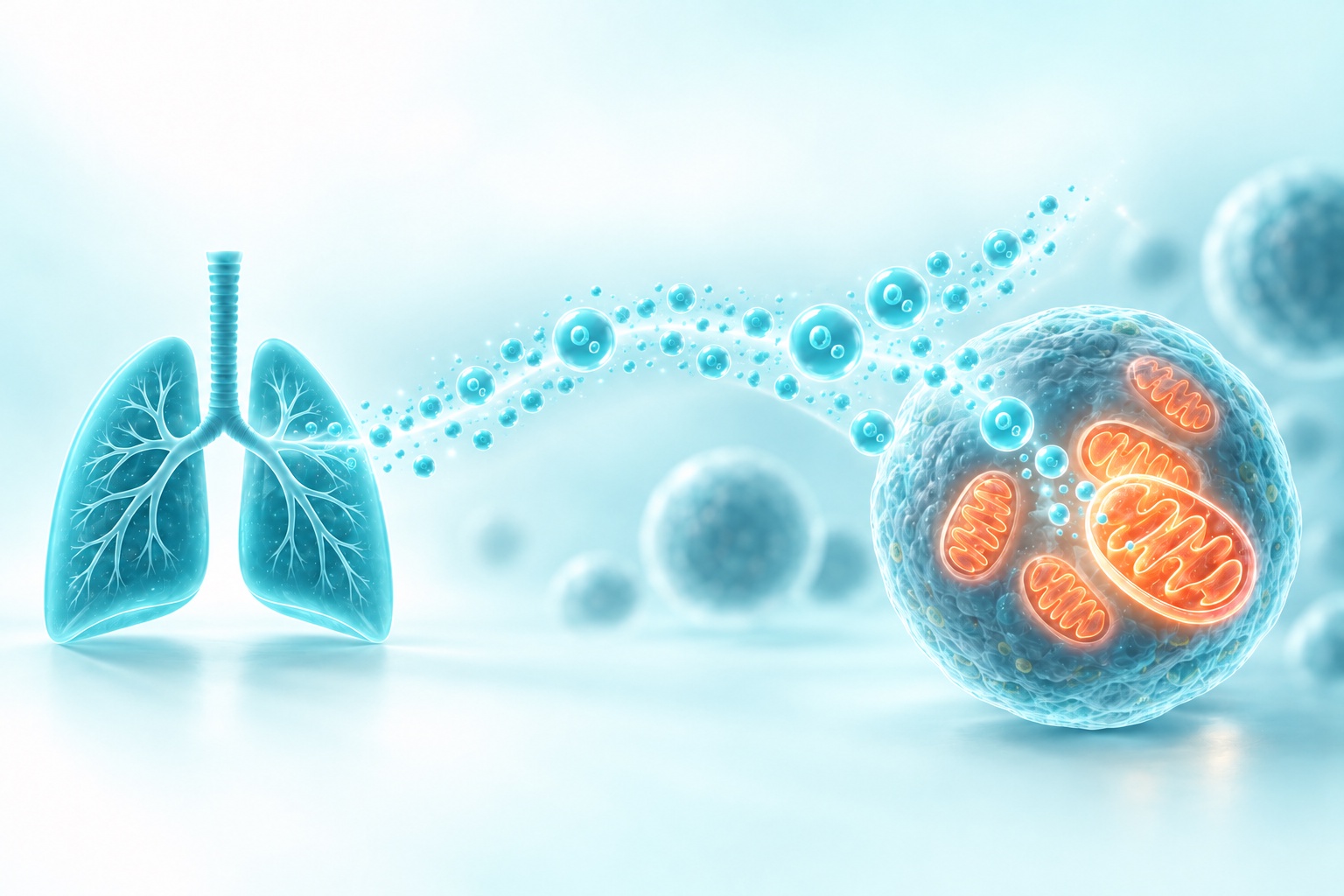
    Your body uses oxygen to turn the energy in food into ATP, the energy your cells can spend. Oxygen is also a raw material for making some hormones, collagen, and brain chemicals, and for immune defense. Cells can sense when oxygen changes and adjust how they work, and that sensing is where IHHT fits.

    Follow one breath, from your lungs to your cells

    Picture walking up a hill. A leg muscle needs energy for the next step. Here is how oxygen helps it get there.

    1. 01

      Your lungs load oxygen

      Oxygen crosses the thin walls of your lungs and attaches to hemoglobin inside red blood cells. Your heart pumps it to your body.

    2. 02

      Working tissue unloads it

      Where cells are busy, hemoglobin lets go of oxygen more easily. This local handoff is called the Bohr effect.

    3. 03

      Mitochondria capture the energy

      Food supplies the energy. Oxygen sits at the end of the mitochondrial chain, which lets cells make ATP efficiently.

    4. 04

      Cells spend the ATP

      Muscles use ATP to contract and relax. Nerves use it to keep signaling. Same chemistry, different jobs.

    One surprising exception: mature red blood cells carry oxygen everywhere but have no mitochondria. They make their own energy from glucose without using oxygen.

    What else does oxygen do in the body?

    Oxygen is not only for energy. It is a raw material in hundreds of reactions. A few that rarely get mentioned:

    • Making steroid hormones

      Oxygen-using enzymes reshape cholesterol into hormones such as cortisol, testosterone, and estrogen.

    • Making brain chemicals

      Oxygen is needed in the first steps of making dopamine and serotonin.

    • Building strong collagen

      Oxygen-dependent enzymes help new collagen strands mature into stable tissue.

    • Immune defense

      Some white blood cells turn oxygen into reactive chemicals to break down microbes.

    • Adjusting blood flow

      Oxygen helps make nitric oxide, a signal that tells blood vessels to relax.

    • Calling for red blood cells

      The kidneys sense oxygen and can release EPO, the signal to make more red blood cells.

    • Activating vitamin D

      Oxygen-using enzymes in the liver and kidneys help make the active form of vitamin D.

    • Handling fats

      Oxygen helps make bile acids for digesting fat and carnitine, which moves fat into mitochondria.

    Taking part in a reaction is not the same as being improved by extra oxygen. Breathing more oxygen does not predict higher hormone or vitamin D levels.

    Where IHHT fits: cells that sense oxygen

    IHHT (Intermittent Hypoxic-Hyperoxic Training) alternates lower-oxygen and oxygen-rich air through a mask while the client rests. Here is what happens at each stage.

    • Lower-oxygen interval. Blood oxygen dips a little, and sensors near the carotid arteries adjust breathing.
    • Inside the cell. Proteins called HIFs normally get broken down. When oxygen is scarcer, more of them stay active and change which genes the cell reads. This was the subject of the 2019 Nobel Prize.
    • Oxygen-rich recovery. The client switches to oxygen-enriched air and blood oxygen climbs back up.
    • Across sessions. The idea is that repeating the challenge and recovery gives the body practice adapting. Research tests this with specific measures, like walking distance.

    What the number on the screen means

    The oxygen number on the Mito2 screen (SpO2) shows how much oxygen your blood is carrying. It does not show how much oxygen a muscle or organ used, or how much energy your cells made. Think of it as your blood-oxygen response to each interval, not a measure of cell efficiency.

    What the research found, and what it didn't

    QuestionWhat studies foundWhat it means
    Exercise toleranceA 2022 review of eight controlled studies at rest found several reported better exercise tolerance or peak oxygen uptake. SourcePromising, mostly in selected older or clinical groups. How much is due to IHHT is still uncertain.
    Red blood cellsFitness improved in one trial without matching changes in blood counts. The review called blood evidence inconclusive. SourceA short seated session is not the same as living at altitude.
    Mitochondria and ATPMitochondrial quality control is a proposed mechanism and an active research topic. SourceNo controlled study shows a body-wide increase in ATP from IHHT.
    TolerabilityA 2026 pilot of 12 screened people reported full adherence and no severe side effects. Some had brief headaches. SourceEncouraging, but too small to settle safety for everyone.

    These studies looked at specific protocols and groups, not the Mito2 device. Results cannot be predicted for any one person.

    Explain Mito2 in 30 seconds

    "Your body uses oxygen to turn food into ATP, the energy a muscle spends to take a step and your heart uses to keep beating. Your cells can also sense when oxygen changes. Mito2 works with that sensing system. Through a mask, you breathe lower-oxygen air for a short interval, then oxygen-rich air while your blood oxygen recovers. We repeat that cycle and monitor your response. That is what we mean by cellular training: giving your body repeated practice responding to a change in oxygen."

    Keep reading: what IHHT is, IHHT or hyperbaric, or the research library.

    Sources

    1. Biochemistry, cellular respiration and ATP (NCBI Bookshelf)
    2. Physiology, oxygen transport (NCBI Bookshelf)
    3. Physiology, Bohr effect (NCBI Bookshelf)
    4. Oxygen-using enzymes in steroid and bile acid synthesis (PMC)
    5. Collagen maturation and oxygen (PubMed 21537302)
    6. Oxygen sensing and hypoxia-inducible factors (PMC)
    7. Systematic review of intermittent hypoxia-hyperoxia, 2022 (PMC9156652)
    8. Exploratory IHHT pilot, 2026 (PMC13398225)

    Mito2 is general wellness equipment. It is not intended to diagnose, treat, cure, or prevent any disease. Clients are screened and sessions are supervised by trained staff.

    Share this article

    Ready to Transform Your Facility?

    Discover if Mito2 is the right fit for your wellness business with our personalized assessment.

    Take the Revenue Ready Score
    MITO2

    Responsive Oxygen Training equipment for health & wellness professionals, also known as Altitude Therapy or IHHT. Designed and refined by our in-house engineering and product research team since 2018. Manufactured by Ergo Flex Technologies in the United States.

    IHHT = Intermittent Hypoxic-Hyperoxic Training

    Wellness Disclaimer: Mito2™ devices are designed for general wellness and relaxation purposes only. These products are not intended to diagnose, treat, cure, or prevent any disease. They are not medical devices and have not been evaluated or approved by the FDA for any medical purpose.

    Medical Disclaimer: The information provided on this website is for educational and informational purposes only. It is not intended as a substitute for professional medical advice, diagnosis, or treatment. Always seek the advice of your physician or other qualified healthcare provider with any questions you may have regarding a medical condition. Never disregard professional medical advice or delay in seeking it because of something you have read on this website.

    Results Disclaimer: Individual results may vary. Testimonials, case studies, and examples found on this website are not guarantees that you or your clients will achieve the same or similar results. Results depend on many factors including but not limited to individual health status, compliance with protocols, and other variables beyond our control.

    Financial Disclaimer: Any revenue projections, business performance estimates, or financial examples referenced on this website are illustrative only and not guarantees of income or profit. Actual business results will vary based on location, market conditions, pricing strategy, operational execution, and many other factors.

    Research Disclaimer: Scientific research cited on this website relates to the underlying mechanisms of intermittent hypoxic-hyperoxic training and hypoxia-inducible factors (HIF). Citations are provided for educational context and do not constitute clinical claims about the Mito2™ device specifically. Peer-reviewed studies may have been conducted under controlled conditions that differ from typical commercial use.

    © 2026 Mito2. Manufactured by Ergo Flex Technologies in the United States. All rights reserved.