How Responsive Oxygen Training (Altitude Therapy / IHHT) Works

Understand the science, see how Mito2™ delivers it, and discover why altitude training is the modality forward-thinking facilities are adding.

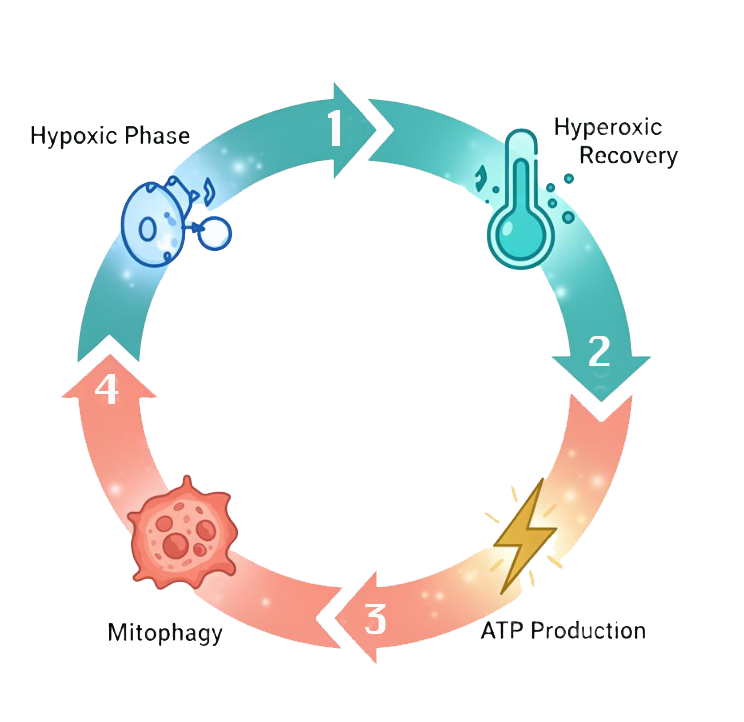
IHHT oxygen therapy 4-step cycle diagram: Hypoxic Phase, Hyperoxic Recovery, Mitophagy, ATP Production

Responsive Oxygen Training, also known as Altitude Therapy or IHHT (Intermittent Hypoxic-Hyperoxic Training), alternates low- and high-oxygen intervals to train your cells, support mitochondrial function, and enhance the body's natural recovery and resilience.

The Science Behind Mito2

What is Responsive Oxygen Training (Altitude Therapy / IHHT)?

Responsive Oxygen Training (Altitude Therapy / IHHT), also known as Altitude Training or IHHT, is a cutting-edge cellular wellness technology that alternates between low and high oxygen concentrations to train your cells, optimize mitochondrial function, and enhance your body's natural healing capabilities.

Hypoxic Phase

~11–15% Oxygen

Controlled low-oxygen air, similar to moderate altitude, activates your body's adaptive systems. This triggers HIF-1α (Hypoxia-Inducible Factor), the Nobel Prize-winning discovery that regulates cellular oxygen sensing. Each cycle lasts 4 minutes.

  • Stimulates mitochondrial biogenesis
  • Activates HIF-1α cellular response
  • Triggers EPO and angiogenesis pathways

Hyperoxic Phase

60–75% Enriched Oxygen Recovery

Enriched oxygen air accelerates reoxygenation, amplifies the redox signal, and supports rapid restoration of SpO₂. This makes IHHT more effective than hypoxia alone. Recovery phases last 2–3 minutes per cycle.

  • Accelerates SpO₂ restoration
  • Amplifies the adaptive redox signal
  • Supports tissue regeneration

The Altitude Training Cycle

4 min
Hypoxic Phase
2–3 min
Hyperoxic Phase
4–6 cycles
28–47 min session

Nobel Prize Science

The 2019 Nobel Prize in Physiology or Medicine was awarded for discovering how cells sense and adapt to oxygen availability through HIF-1α pathway, the exact mechanism IHHT activates.

Mitochondrial Training

IHHT stimulates mitochondrial biogenesis, the creation of new, healthier mitochondria. More efficient mitochondria mean better energy production, faster recovery, and improved cellular function.

Cellular Adaptation

Repeated hypoxic-hyperoxic cycles train cells to become more resilient and efficient. This adaptation improves oxygen utilization throughout the body, benefiting every organ system.

Whole-Body Cellular Benefits

Brain

Enhanced cognitive function, mental clarity, and neuroprotection

Heart

Improved cardiovascular efficiency and circulation

Lungs

Optimized respiratory function and oxygen uptake

Energy

Increased ATP production and reduced fatigue

*Responsive Oxygen Training (Altitude Therapy / IHHT) is a wellness technology intended to support general health and wellbeing. It is not intended to diagnose, treat, cure, or prevent any disease. Results may vary. Consult with a healthcare professional before beginning any new wellness protocol.

The Science Your Clients Will Love

How IHHT Regenerates Cells

IHHT uses controlled oxygen cycling, the same biological principle as elite altitude training, delivered in comfortable 28–47 minute sessions at your facility.

01

Hypoxic Phase

Low-Oxygen Breathing

4 min cycles

Your client breathes air with reduced oxygen (~11–15% O₂), similar to moderate altitude. This activates HIF-1α and triggers the body's cellular adaptation response, signaling damaged mitochondria for removal.

02

Hyperoxic Recovery

Enriched Oxygen Phase (60–75% O₂)

2–3 min cycles

The system switches to enriched oxygen air (60–75% O₂), accelerating reoxygenation and amplifying the adaptive redox signal. This recovery phase is what makes IHHT more effective than hypoxia alone.

03

Mitophagy Activation

Cellular Cleanup

Ongoing process

The alternating oxygen cycles trigger mitophagy, your body's process of eliminating damaged, inefficient mitochondria and replacing them with healthy ones.

04

Enhanced ATP Production

More Cellular Energy

28–47 min session

With healthier mitochondria, your cells produce ATP more efficiently. This translates to improved energy, mental clarity, and physical performance across the entire body.

Practitioner consulting with happy client about IHHT treatment

Personalized Consultation

Every client gets a customized protocol

28–47
Minutes per
session
4–6
Cycles per
session

Based on Nobel Prize-winning research: The 2019 Nobel Prize in Physiology or Medicine was awarded for discoveries of how cells sense and adapt to oxygen availability.

One System, Two Powerful Modes

Designed for Every Client

Mito2 adapts to your client's needs, from peaceful wellness sessions to high-intensity athletic training. Serve every demographic with one versatile system.

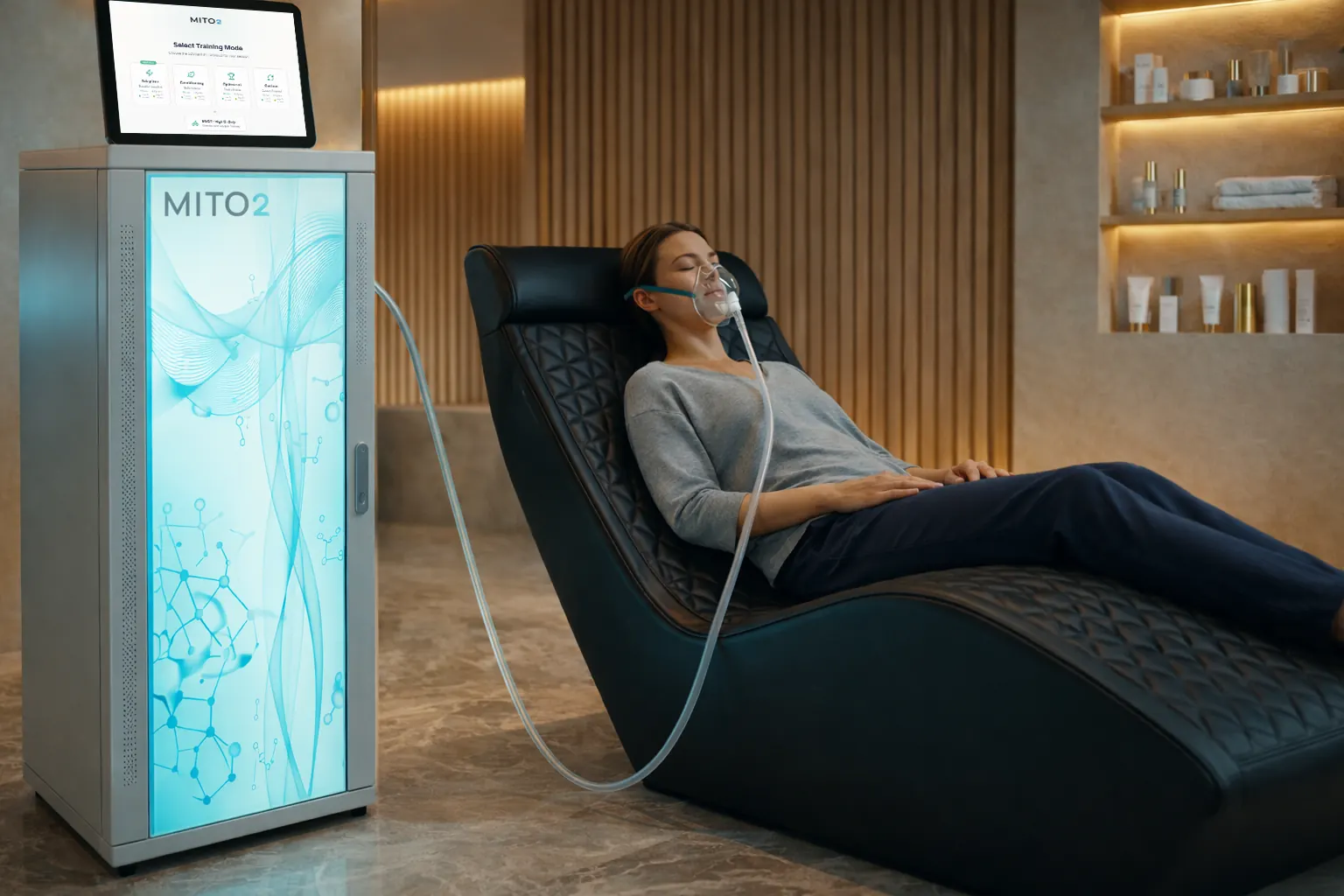
Mito2 Resting Mode
Resting Mode

Resting Mode

Lounger Configuration, All Phases

The primary IHHT experience. Clients recline comfortably while the system delivers controlled oxygen cycling. Used across all three protocol phases, Adaptive, Conditioning, and Optimized.

Ideal For

  • All new clients (Adaptive Phase)
  • Wellness & cellular regeneration
  • Stress recovery & relaxation
  • Post-treatment recovery
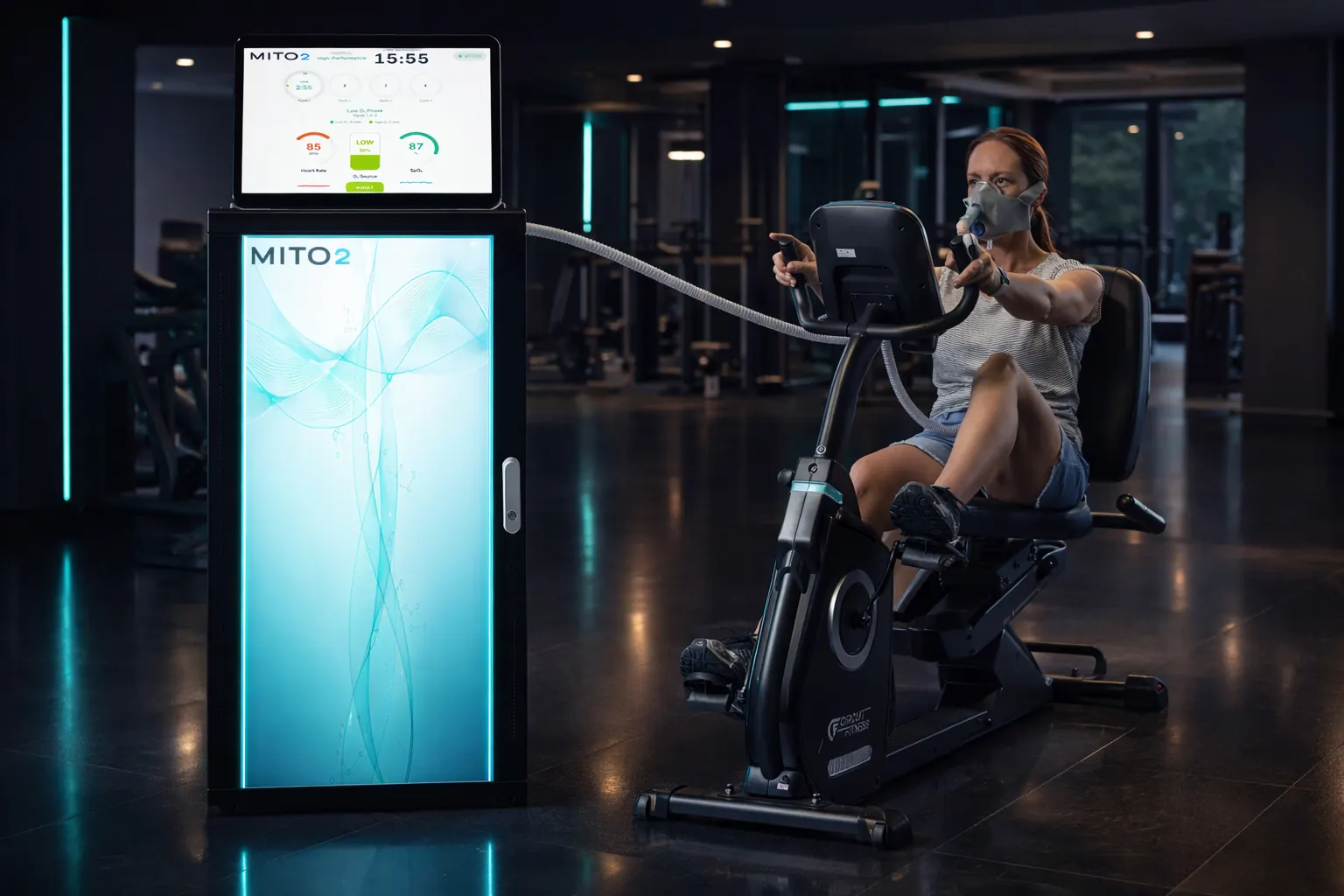
Mito2 Active Mode
Active Mode

Active Mode

Bike Configuration, Optimized Phase Only

Combines IHHT with light cardio to amplify the adaptive signal. Only available in the Optimized Phase after the client has proven stable across 3 consecutive resting sessions with all metrics in range.

Ideal For

  • Stable Optimized Phase clients only
  • Clinician-determined intensity
  • Steady-state cardio (no HIIT)
  • Athletes seeking deeper adaptation
Both modes use the same proven IHHT science, customize the experience for each client
Intuitive Interface

So Simple, Anyone Can Run It

Your staff won't need a training manual. The Mito2 touchscreen guides every session from mode selection to real-time monitoring, so you can focus on your clients, not the tech.

Mito2 touchscreen interface showing the 4-screen session flow: mode selection, user profile setup, mask confirmation, and live session monitoring with real-time vitals

Mito2™ Interface, From mode selection to live session monitoring in 4 simple steps

Guided Setup

Step-by-step onboarding walks staff through every session, no manual needed.

Real-Time Monitoring

SpO₂, heart rate, and oxygen levels displayed live so you always know your client is safe.

Built-In Safety

Automatic safety thresholds pause the session if any parameter goes out of range.

One-Tap Protocols

Pre-built Adaptive, Conditioning, and Optimized modes, select and start in seconds.

Training Protocols

5 Built-In Modes, One Simple Interface

Every Mito2 system comes pre-loaded with progressive altitude training protocols. Select a mode, press start, the system handles the rest.

Start Here

Adaptive

Establish baseline

28 min·4 Cycles
Low O₂ (4 min)
·
High O₂ (3 min)

Conditioning

Build volume

30 min·5 Cycles
Low O₂ (4 min)
·
High O₂ (2 min)

Optimized

Peak stimulus

42 min·6 Cycles
Low O₂ (4 min)
·
High O₂ (3 min)

Custom

Custom protocol

12 min·3 Cycles
Low O₂ (2 min)
·
High O₂ (2 min)
or

EWOT · High O₂ Only

Exercise with Oxygen Therapy, continuous enriched oxygen during movement

Mito2 Session Snapshot

The Mito2 Session Snapshot

After each session, Mito2 provides a simple snapshot of key metrics, not a diagnosis, just a window into how the body responded during that session.

Session Complete

Adaptive Phase · 4 Cycles

Duration
31:33
Total session time
Cycles
4/4
Completed / Programmed
Low Phase SpO₂
82%Ideal zone
Min: 80%  Max: 91%
Target: 82–88%
Heart Rate
95BPM avg
Low Phase: 107 BPM   High Phase: 83 BPM
Ceiling: 148 BPM

Performance Metrics

Time to Hypoxia
71.1s
Progressing
C2: 67sC3: 73sC4: 73s
Target: 150s+
Time to Recovery
24.8s
Strong
C1: 24sC2: 25sC3: 25sC4: 25s
Target: ≤45s
Safety Events
0
Clean
Auto-switches · Target: 0

Your Session Snapshot

3 of 4 metrics in range, safe and effective session delivered

Low Phase SpO₂
82%
82–88%
Time to Hypoxia
71.1s
150s+
Time to Recovery
24.8s
≤45s
Safety Events
0
0

Example session results screen, actual values vary per individual

1

Low Phase SpO₂

The oxygen level during the low-oxygen phase, like a workout intensity level for your cells.

Ideal ✓Target: 82–88%
2

Time to Hypoxia

How quickly oxygen levels enter the low-oxygen zone. Everyone responds differently, and every pace is beneficial.

Progressing ✓Target: 150s+
3

Time to Recovery

How quickly levels bounce back during the high-oxygen phase. A reflection of how well the body is adapting.

Strong ✓Target: ≤45s
4

Safety Events

Built-in safety monitoring that ensures every session stays comfortable and within safe parameters.

Clean ✓Target: 0

Every session delivers real benefits, no matter what these numbers say. These measurements help us understand how each person's body is adapting. Some people respond quickly, some slowly, both are completely normal. The numbers guide the pace, not the value of the session.

Smiling client looking refreshed after an Altitude Therapy session
Behind the data

This is what those numbers feel like.

Members walk out lighter, clearer head, easier breath, a small but unmistakable sense that the body just got something it had been missing. The chart is the proof. The smile is the point.

2019 Nobel Prize in Physiology or Medicine

The Science of Oxygen Sensing

IHHT is built on Nobel Prize-winning research that revealed how cells detect and adapt to changing oxygen levels, a fundamental discovery that explains why altitude training works.

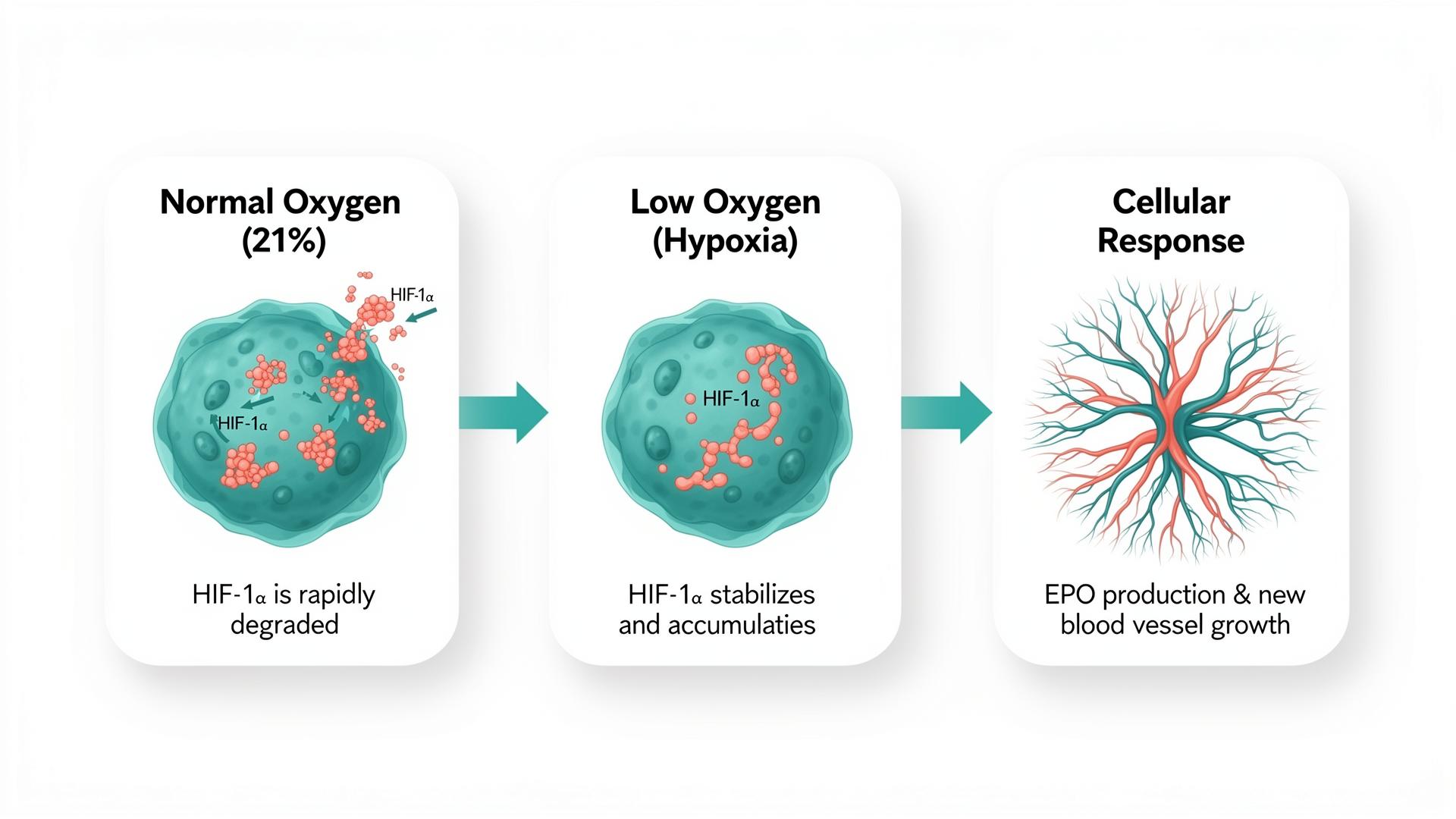
HIF-1α oxygen sensing pathway infographic: Normal Oxygen where HIF-1α is degraded, Low Oxygen (Hypoxia) where HIF-1α stabilizes and accumulates, and Cellular Response showing EPO production and new blood vessel formation

The HIF-1α Pathway, How your cells sense and respond to oxygen levels

The HIF-1α Pathway: How Your Cells Respond to Oxygen

Normal Oxygen (21%)

HIF-1α Degraded

Under normal oxygen conditions, the HIF-1α protein is continuously produced but immediately broken down. Your cells maintain baseline function.

Status: Stable, no adaptation triggered
Low Oxygen (~11–15%)

HIF-1α Accumulates

During hypoxia, HIF-1α stabilizes and enters the cell nucleus. This master switch activates over 100 genes that help cells adapt to low oxygen.

Status: Adaptation cascade activated
Cellular Response

Adaptation Begins

HIF-1α triggers production of EPO, new blood vessels, and most importantly, mitophagy: the removal of damaged mitochondria and creation of new ones.

Result: Stronger, more efficient cells

HIF-1α Discovery

Gregg Semenza

Identified the protein that orchestrates cellular oxygen response

VHL Gene

William Kaelin Jr.

Discovered how cells mark HIF-1α for destruction in normal oxygen

Oxygen Sensing

Peter Ratcliffe

Revealed the oxygen-sensing mechanism that regulates HIF-1α

Clinical Significance

Nobel Committee

Foundation for understanding cellular oxygen sensing and adaptation

How IHHT Harnesses This Science

Mito2 precisely controls oxygen levels to strategically activate the HIF-1α pathway. By cycling between hypoxia and hyperoxia, we repeatedly trigger your body's natural adaptation response, training your cells to become more resilient and efficient.

1
Controlled hypoxia activates HIF-1α signaling
2
Mitophagy removes damaged, inefficient mitochondria
3
Hyperoxia phases accelerate cellular recovery
4
Repeated cycles build lasting adaptation
Healthier
Mitochondria
HYPOXIA ~11–15%
HYPEROXIA 60–75% O₂
HIF-1α ACTIVATION
RECOVERY PHASE

Source: The Nobel Prize in Physiology or Medicine 2019 was awarded jointly to William G. Kaelin Jr., Sir Peter J. Ratcliffe and Gregg L. Semenza "for their discoveries of how cells sense and adapt to oxygen availability."

The Foundation of True Wellness

Healthy Cells = Healthy Everything

Every organ, every tissue, every function in your clients' bodies depends on one thing: healthy, oxygen-efficient cells. IHHT works at the foundational level, training cells to use oxygen more effectively, which cascades into benefits throughout the entire body.

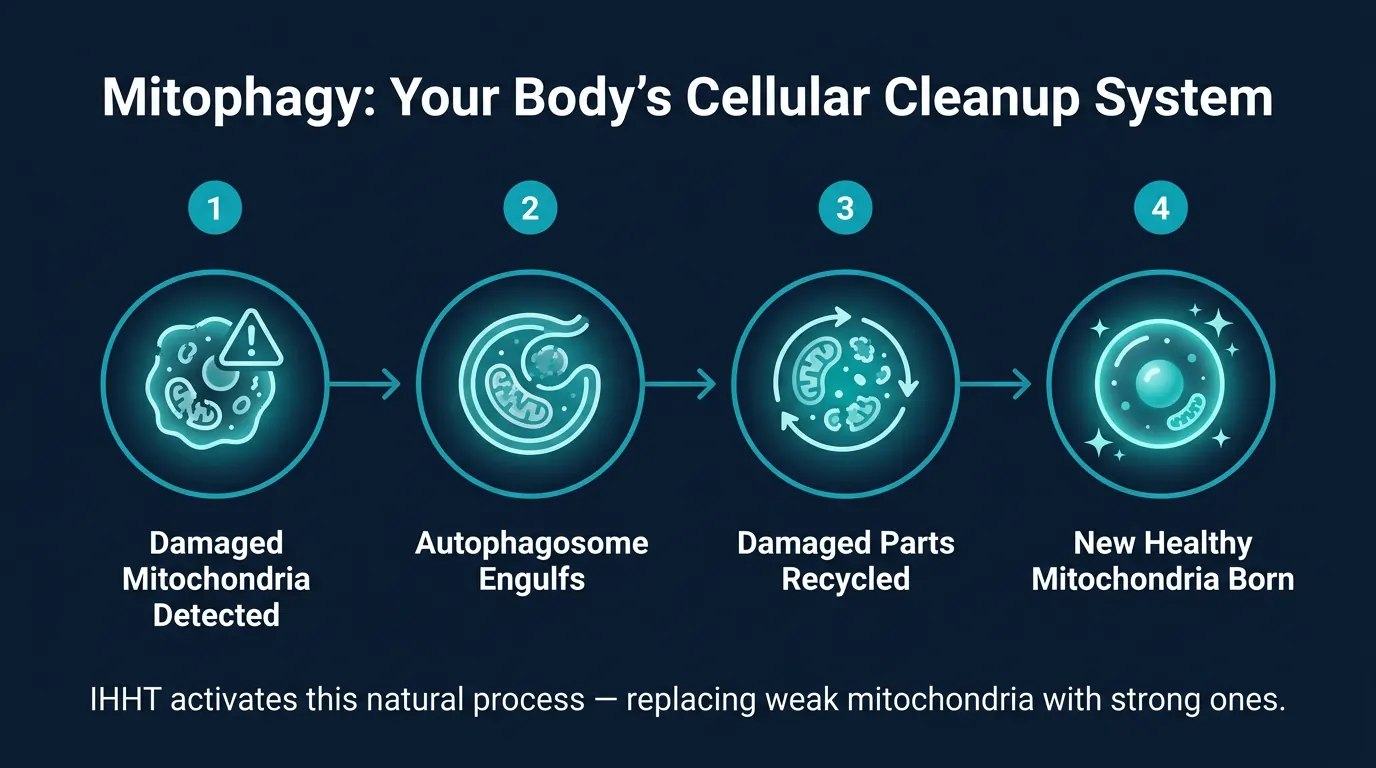
Mitophagy 4-step infographic: 1. Damaged Mitochondria Detected, 2. Autophagosome Engulfs, 3. Damaged Parts Recycled, 4. New Healthy Mitochondria Born

Mitophagy, How IHHT triggers cellular cleanup and mitochondrial renewal

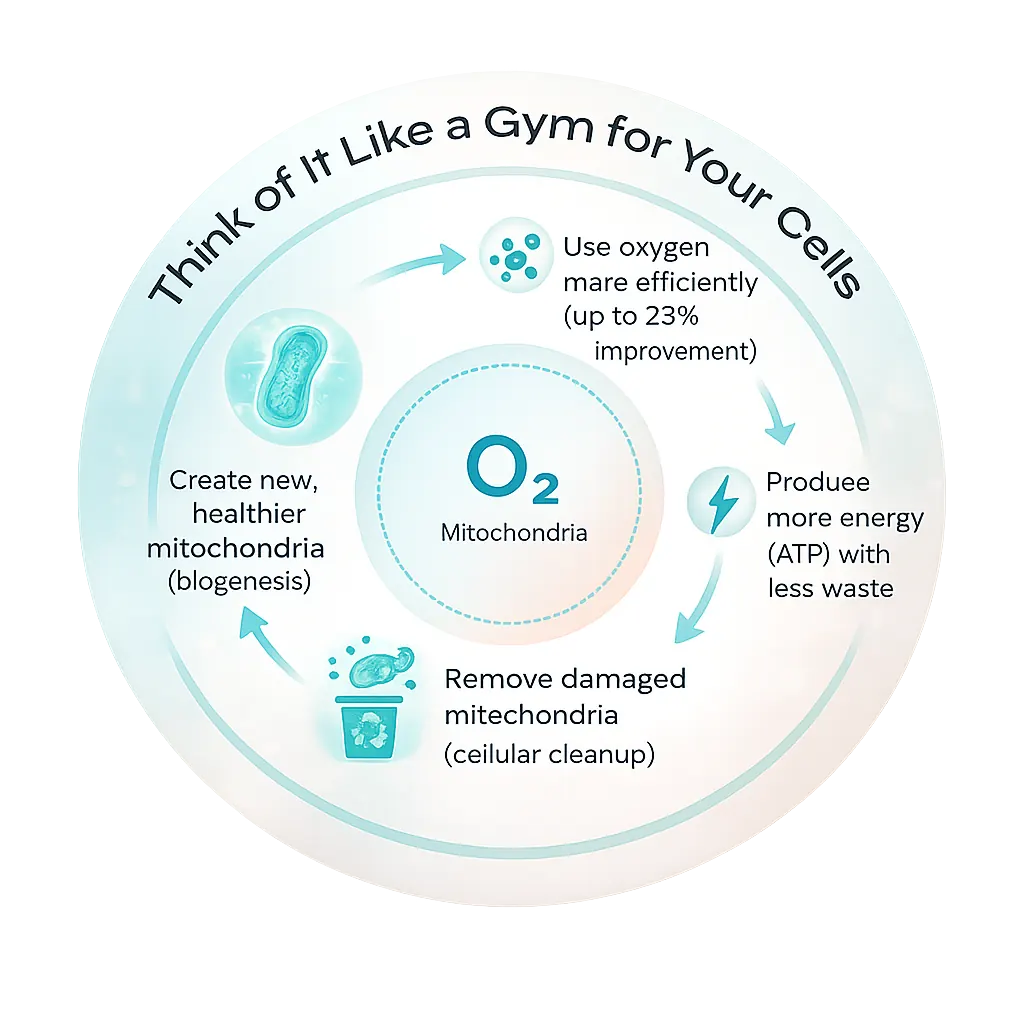
Think of It Like a Gym for Your Cells, oxygen efficiency, ATP production, cellular cleanup, and biogenesis cycle

Think of It Like a Gym for Your Cells

Just as physical exercise strengthens muscles, IHHT "exercises" the mitochondria, the tiny powerhouses inside every cell. By alternating between low and high oxygen levels, cells learn to:

  • Use oxygen more efficiently (up to 23% improvement)
  • Produce more energy (ATP) with less waste
  • Remove damaged mitochondria (cellular cleanup)
  • Create new, healthier mitochondria (biogenesis)

Brain & Nervous System

Enhanced cognitive function and neuroprotection

  • Improved memory and mental clarity
  • Reduced brain fog and fatigue
  • Enhanced focus and concentration
  • Support for healthy brain aging

Studies show intermittent hypoxic training increases brain adaptive potential, endurance, and working capacity through enhanced mitochondrial function and neuroprotection.

Front Neurosci. 2022;16:939302

Heart & Cardiovascular

Strengthened heart function and circulation

  • Improved blood pressure regulation
  • Enhanced exercise tolerance
  • Better circulation throughout body
  • Reduced cardiovascular stress markers

Clinical trials confirm IHHT improves exercise capacity and functional outcomes, with measurable gains in cardiovascular endurance and recovery.

J Cachexia Sarcopenia Muscle. 2024;15(6):2781-2791

Lungs & Respiratory

Optimized oxygen utilization and breathing

  • Increased oxygen efficiency
  • Improved breathing capacity
  • Enhanced respiratory muscle strength
  • Better stress response during exertion

Research demonstrates intermittent hypoxic-hyperoxic exposure enhances cardiorespiratory responses and ventilatory efficiency during submaximal exercise.

Front Physiol. 2024;15:1474649

Metabolism & Energy

Revitalized cellular energy production

  • Improved blood sugar regulation
  • Enhanced fat metabolism
  • Increased energy levels
  • Better metabolic flexibility

Randomized controlled trial shows intermittent hypoxia/hyperoxia significantly decreases blood glucose and improves lipid profiles in prediabetic individuals.

High Alt Med Biol. 2019;20(4):383-391

Skin & Appearance

Cellular renewal for radiant, healthy skin

  • Improved skin oxygenation
  • Enhanced collagen production
  • Reduced signs of cellular aging
  • Better tissue repair and recovery

Hypoxic preconditioning significantly increases skin tissue oxygenation and viability, supporting the skin's natural repair and renewal mechanisms.

High Alt Med Biol. 2008;9(1):76-88

Immune System

Strengthened natural defense mechanisms

  • Enhanced immune cell function
  • Reduced systemic inflammation
  • Improved stress resilience
  • Better recovery from illness

Intermittent hypoxic training reduces circulating inflammatory markers and oxidative stress, supporting the body's natural immune and recovery capabilities.

Front Physiol. 2022;12:764299

*These statements have not been evaluated by the FDA. This device is not intended to diagnose, treat, cure, or prevent any disease. Results may vary. Consult with healthcare professionals before implementing any new wellness protocols.

What This Feels Like

The science is impressive. The way it feels is the point.

Cellular adaptation is invisible. The difference it makes, in mood, energy, and recovery, is not.

Smiling woman glowing with energy after an Altitude Therapy session

Energy

Wake up actually rested.

Clients describe a steadier kind of energy, fewer afternoon crashes, more day to use.

Peaceful man relaxing after a wellness session, eyes closed and smiling

Calm

Finally exhale.

It's the rare 30 minutes where the nervous system gets to stand down, and the body remembers how to recover.

Group of friends laughing together at a wellness studio after sessions

Confidence

Feel like you again.

By session three, most members notice it: clearer focus, lighter mood, and a body that responds when they ask it to.

Active senior man walking confidently outdoors on a tree-lined path

Comfort & Mobility

Reconnect with your hands and feet.

Many adults notice tingling, numbness, or that disconnected feeling creep in with age. Peer-reviewed research on intermittent hypoxic training points to improved microcirculation and nerve oxygenation, supporting the sensation, comfort, and mobility that make everyday life feel like yours again.

*These statements have not been evaluated by the Food and Drug Administration. Mito2™ and Responsive Oxygen Training (Altitude Therapy / IHHT) are not intended to diagnose, treat, cure, or prevent any disease. Individual experiences vary. Consult a qualified healthcare professional before beginning any new wellness program.

IHHT Mechanism of Action

How IHHT Triggers Angiogenesis

Angiogenesis, the formation of new blood vessels from existing ones, is one of the most powerful physiological responses IHHT activates. By cycling through controlled hypoxia, IHHT stimulates the same VEGF-driven pathway your body uses to heal wounds, grow tissue, and restore circulation to oxygen-starved areas.

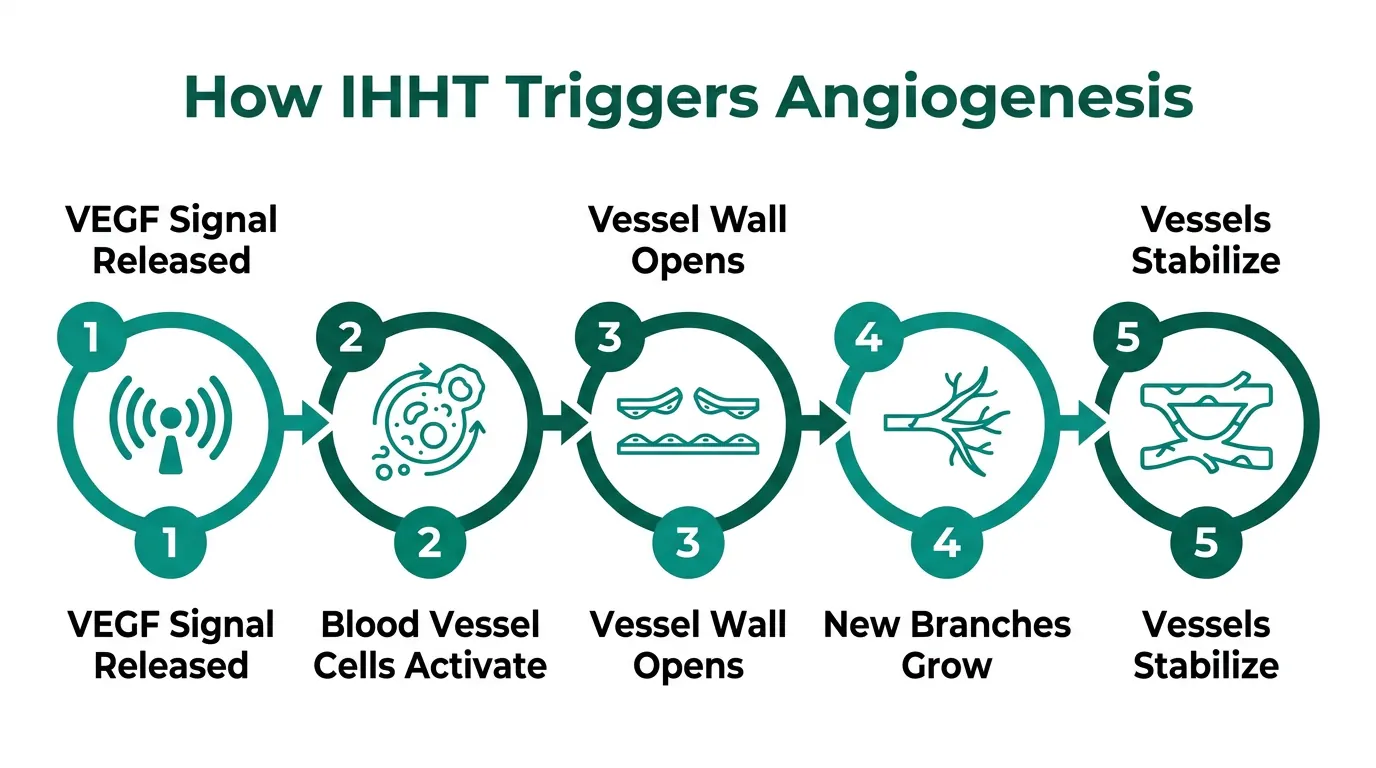
Angiogenesis 5-step infographic: 1. VEGF Signal Released, 2. Blood Vessel Cells Activate, 3. Vessel Wall Opens, 4. New Branches Grow, 5. Vessels Stabilize

Angiogenesis, How IHHT triggers the formation of new blood vessels through VEGF signaling

01

Low Oxygen Sends a Signal

During IHHT's low-oxygen phase (~11–15% O₂), cells detect reduced oxygen and release VEGF, the master signal that tells the body to build new blood vessels.

02

Blood Vessel Cells Activate

VEGF activates cells lining existing blood vessels, preparing them to sprout toward areas that need more oxygen.

03

Vessel Wall Opens Up

The structural wall surrounding the existing vessel breaks down, allowing activated cells to move outward and begin forming new branches.

04

New Branches Grow

Cells multiply and migrate outward, forming new tube-like sprouts that extend toward oxygen-starved tissue.

05

New Vessels Stabilize

Support cells wrap around the new vessels, strengthening them into mature, functional blood vessels that deliver oxygen and nutrients.

Why This Matters for Wellness Professionals

Research shows that hypoxic training may support the body's natural process of forming new capillary networks through angiogenesis. This HIF-1α–driven process supports improved oxygen and nutrient delivery at the tissue level, a key factor in the body's natural maintenance and renewal processes.

This is the same HIF-1α → VEGF pathway recognized by the 2019 Nobel Prize in Physiology or Medicine, awarded to Kaelin, Ratcliffe, and Semenza for their discoveries on how cells sense and adapt to oxygen availability.

Carmeliet P. "Angiogenesis in life, disease and medicine." Nature. 2005;438(7070):932-936. doi:10.1038/nature04478 , PubMed

Semenza GL. "Hypoxia-inducible factors in physiology and medicine." Cell. 2012;148(3):399-408. doi:10.1016/j.cell.2012.01.021 , PubMed

Kaelin WG Jr, Ratcliffe PJ, Semenza GL. "Oxygen sensing by metazoans: the central role of the HIF hydroxylase pathway." Molecular Cell. 2008;30(4):393-402., 2019 Nobel Prize in Physiology or Medicine

*These statements are based on peer-reviewed research on physiological mechanisms. Individual results may vary. Mito2™ devices are designed for general wellness and relaxation purposes. Not intended to diagnose, treat, cure, or prevent any disease.

Therapy Comparison

IHHT vs. Hyperbaric Oxygen (HBOT)

Understanding the key differences helps you make the right choice for your facility and clients.

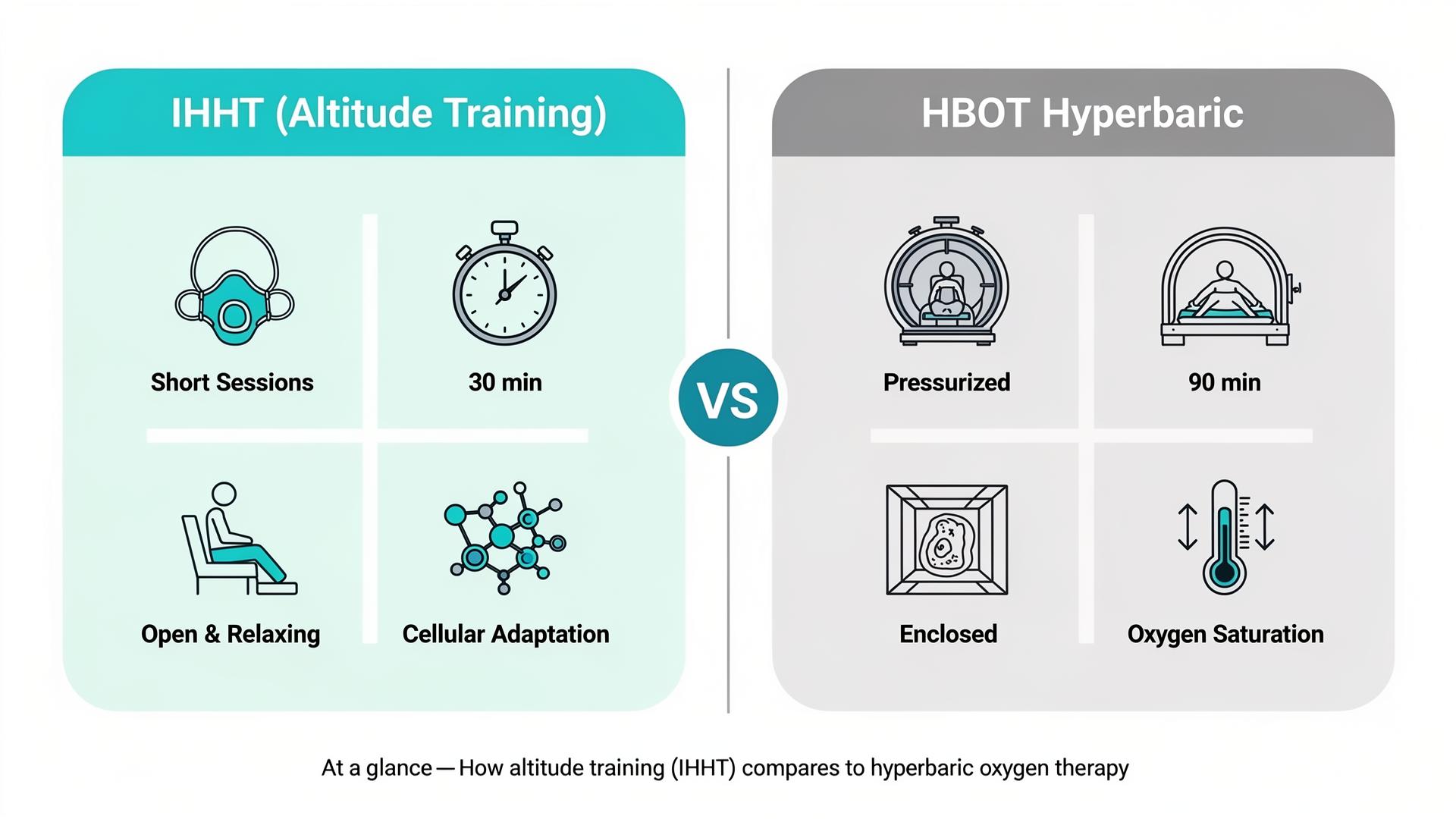
IHHT vs HBOT comparison infographic: IHHT uses a breathing mask, 30 min sessions, open relaxing environment with cellular adaptation. HBOT uses a pressurized chamber, 90 min sessions, enclosed space with oxygen saturation.

At a glance, How altitude training (IHHT) compares to hyperbaric oxygen therapy

Feature
IHHT
(Mito2 System)
HBOT
(Hyperbaric Chamber)
How It Works
Alternates between low (~11–15%) and enriched oxygen (60–75%) through a mask
Breathes 100% oxygen in a pressurized chamber (1.5-3 ATA)
Session Duration
28–47 minutes (phase-dependent)
60-120 minutes
Client Comfort
Relaxed in a lounger or active on a bike, no enclosed space
Enclosed pressurized chamber, may cause claustrophobia
Equipment Cost
Lower investment, smaller footprint
Higher investment, requires dedicated room
Staff Requirements
Minimal training, easy to operate
Specialized training, safety protocols required
Mechanism of Action
Triggers cellular adaptation via HIF-1α pathway (Nobel Prize research)
Increases dissolved oxygen in blood plasma
Mitochondrial Training
Stimulates mitochondrial biogenesis and efficiency
Does not specifically target mitochondrial adaptation
Contraindications
Fewer contraindications, suitable for most clients
More contraindications (ear/sinus issues, certain medications)

The Key Difference: Adaptation vs. Saturation

HBOT temporarily increases oxygen in the blood through pressure. IHHT trains your cells to become more efficient at using oxygen through controlled hypoxic-hyperoxic cycles, creating lasting cellular adaptation backed by Nobel Prize-winning research on the HIF-1α pathway. This means IHHT benefits continue long after the session ends.

Why Facility Owners Choose IHHT

Lower Investment

Mito2 requires significantly less capital than hyperbaric chambers

Smaller Footprint

No dedicated room or special construction required

Higher Throughput

Shorter sessions mean more clients per day

Easier Adoption

Clients prefer open-air sessions over enclosed chambers

*This comparison is for educational purposes. Both IHHT and HBOT are wellness modalities with different applications. Neither is intended to diagnose, treat, cure, or prevent any disease. Consult with appropriate professionals for specific medical conditions.

Why IHHT Stands Out

How IHHT Compares to Other Modalities

Your clients have options. Here's why IHHT offers unique advantages that other wellness technologies simply can't match.

Feature
IHHT
Mito2
HBOT
Hyperbaric
Supplements
Oral
IV Therapy
Infusions
Non-invasive
Targets cellular level
No pressurized chamber
Trains adaptation
Real-time biofeedback
High profit margins
Recurring protocols
Minimal staff needed

Ready to offer something truly different?

See how IHHT can transform your business.

The Foundation

Why Proper Breathing Is the Missing Link

Most people breathe incorrectly, through their mouth, too fast, and too shallow. This undermines every wellness intervention. IHHT works with proper breathing science to optimize how cells receive and use oxygen at the most fundamental level.

Nasal Breathing

Breathing through the nose produces nitric oxide, which dilates blood vessels and improves oxygen absorption by up to 18%. Mouth breathing bypasses this critical mechanism.†

†Lundberg JO et al. Acta Physiol Scand. 1996

CO₂ Tolerance & The Bohr Effect

Carbon dioxide isn't just a waste gas, it's essential for oxygen release at the cellular level. Higher CO₂ tolerance means better oxygen delivery to tissues where it's needed most.†

†Bohr C, Hasselbalch K, Krogh A. Skand Arch Physiol. 1904

Functional Breathing Patterns

Light, slow, deep breathing through the nose activates the parasympathetic nervous system, reduces stress hormones, and creates the ideal conditions for cellular recovery and adaptation.†

†Russo MA et al. Front Hum Neurosci. 2017; PMID: 29375340

IHHT Amplifies What Proper Breathing Starts

Proper breathing optimizes oxygen delivery. IHHT goes further, it trains your cells' mitochondria to become more efficient at using that oxygen. Together, functional breathing and intermittent hypoxic-hyperoxic training create a powerful synergy: better delivery and better utilization. This is why IHHT produces measurable results that clients can feel from their very first session.

*The breathing science described above is based on peer-reviewed research and general respiratory physiology. Individual results may vary. Mito2™ devices are designed for general wellness and relaxation purposes. Not intended to diagnose, treat, cure, or prevent any disease.

See It In Practice

A Real Practitioner Using Mito2 In a Whole-Body Wellness Facility

Tony DeRamus, DC has spent 28 years building Sandstone Chiropractic. Hear why he chose Responsive Oxygen Training as the final modality in his wellness practice.

Individual experiences vary. Statements reflect each practitioner's personal wellness perspective and are not typical or expected outcomes. Mito2 is a wellness device and is not intended to diagnose, treat, cure, or prevent any disease.

Smiling members of a wellness facility community after Altitude Therapy sessions

Imagine your members walking out lighter, clearer, and coming back for more.

That's what Altitude Therapy delivers, session after session.

Get Started

Bring Altitude Therapy to your facility

Request the Mito2™ info pack, complete pricing, case studies, and a one-on-one with a specialist.

Your information is secure and will never be shared.

What you'll receive:

  • Complete pricing
  • Case studies from similar facilities
  • Clinical research and outcome data
  • One-on-one consultation with a specialist
No obligation

We'll help you decide if altitude training is the right fit for your facility.

Prefer to talk now?

Call (936) 280-5333